
What Are Basil Seeds? Benefits, Nutrition, Dosage & Side Effects
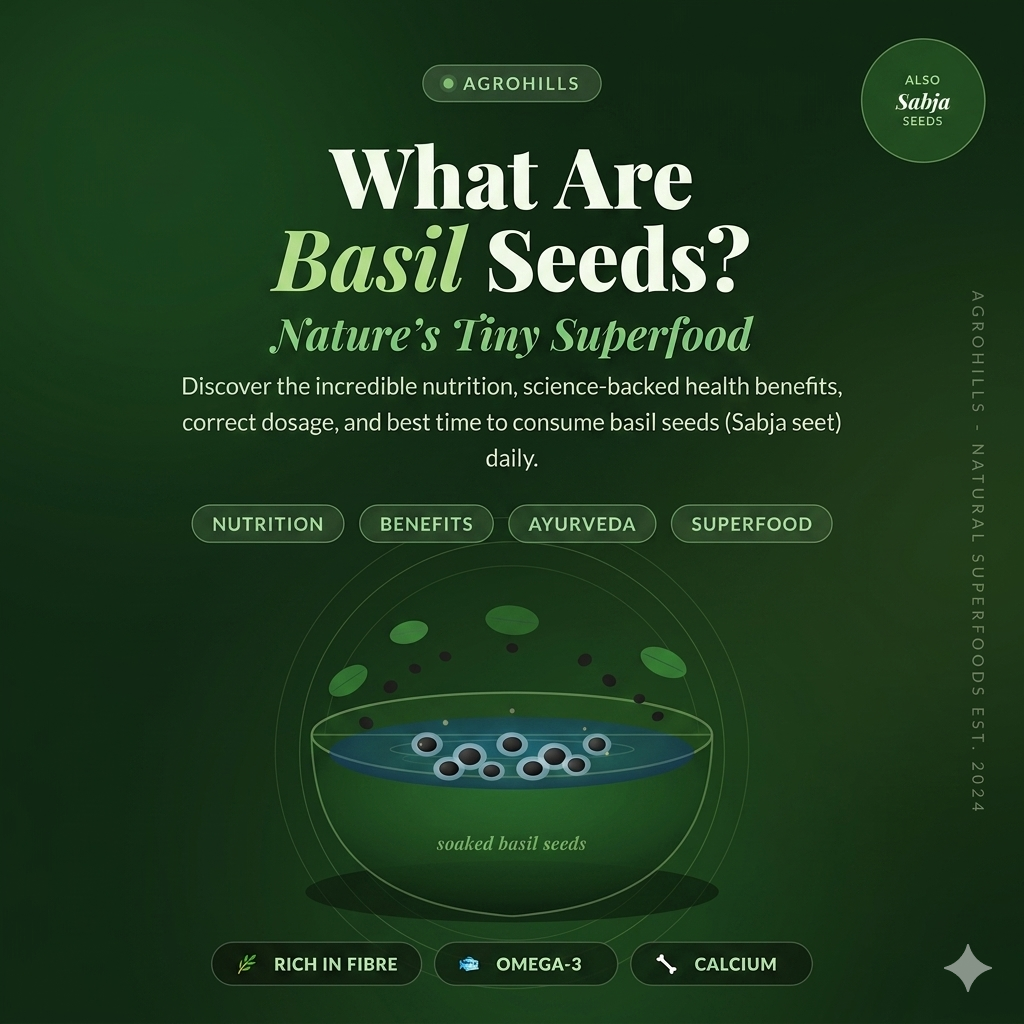
What Are Basil Seeds? Benefits, Nutrition, Dosage & Side Effects
Published by AgroHills | Natural & Organic Living
Have you ever noticed tiny black seeds soaking in your favourite summer drink or healthy dessert? Those are basil seeds — one of nature’s most underrated superfoods. Quietly trending in wellness circles, these small but mighty seeds are packed with nutrients and have been used in traditional medicine for centuries. Let’s explore everything you need to know about basil seeds.
What Are Basil Seeds?
Basil seeds, also known as Sabja seeds, Tukmaria seeds, or Falooda seeds, come from the sweet basil plant (Ocimum basilicum) — the same herb you use in cooking. Unlike the herb itself, basil seeds are harvested from the flowering tops of the plant and are prized not for their flavour, but for their incredible nutritional and health benefits.
They are tiny, oval-shaped, and jet black in colour. When soaked in water, basil seeds swell up to nearly 30 times their size, developing a white, gel-like coating around them. This unique quality makes them popular in drinks, puddings, desserts, and health beverages across India, Southeast Asia, and the Middle East.
Basil seeds are different from chia seeds — though they look similar when soaked, they come from different plants and have distinct nutritional profiles.
Basil Seeds Nutrition Facts
Basil seeds are a nutritional powerhouse. A typical serving of 1 tablespoon (13g) of raw basil seeds contains approximately:
| Nutrient | Amount per 1 tbsp (13g) |
|---|---|
| Calories | 60 kcal |
| Carbohydrates | 7 g |
| Dietary Fibre | 7 g (25% of Daily Value) |
| Protein | 2 g |
| Fat | 2.5 g |
| Omega-3 Fatty Acids | 1,240 mg |
| Calcium | 15% of Daily Value |
| Iron | 10% of Daily Value |
| Magnesium | 10% of Daily Value |
| Vitamin K | Present |
| Polyphenols & Flavonoids | Rich amounts |
Basil seeds are essentially a zero-net-carb food for many people, as almost all their carbohydrates come from fibre. They are naturally low in calories while delivering exceptional fibre, minerals, and plant-based omega-3 fatty acids.
What Are the Benefits of Raw Basil Seeds?
1. Supports Weight Management
The high soluble fibre content in basil seeds forms a thick gel in the stomach when soaked in water. This gel keeps you feeling full for longer, reducing hunger cravings and helping you eat less throughout the day — a natural and effective aid for weight management.
2. Aids Digestion
Basil seeds act as a natural digestive tonic. They help regulate bowel movements, relieve constipation, reduce bloating, and soothe the stomach lining. The mucilage (gel coating) is particularly gentle on the gut and is known to help with acidity and heartburn.
3. Regulates Blood Sugar Levels
The soluble fibre in basil seeds slows down the digestion and absorption of carbohydrates, preventing sudden spikes in blood sugar. This makes them especially beneficial for people managing type 2 diabetes or pre-diabetes.
4. Cools the Body Naturally
In Ayurvedic tradition, basil seeds are considered a natural coolant. Drinks made with soaked basil seeds are traditionally consumed in summer to reduce body heat, prevent heat strokes, and keep the body hydrated.
5. Rich Source of Plant-Based Omega-3
Basil seeds are one of the best plant-based sources of alpha-linolenic acid (ALA), an essential omega-3 fatty acid. Omega-3s support heart health, reduce inflammation, and support brain function.
6. Promotes Healthy Skin and Hair
The flavonoids and polyphenols in basil seeds have strong antioxidant properties that fight free radicals — protecting skin from premature ageing and supporting healthy, lustrous hair growth.
7. Supports Heart Health
Regular consumption of basil seeds may help reduce LDL (bad) cholesterol, lower blood pressure, and improve overall cardiovascular health, thanks to their fibre and omega-3 content.
8. Strengthens Bones
Basil seeds are a good plant-based source of calcium, magnesium, and phosphorus — three minerals essential for maintaining strong and healthy bones.
9. Natural Detoxifier
When soaked, basil seeds help flush out toxins from the body by supporting healthy kidney function and regular bowel movements.
10. Boosts Immunity
The presence of vitamins, minerals, and antioxidants in basil seeds helps strengthen the immune system, making the body more resilient against infections and illness.
How Much Basil Seeds Should You Take Per Day?
The recommended daily intake of basil seeds for adults is:
1 to 2 tablespoons (approximately 13–26 grams) per day
It is important to always soak basil seeds in water before consuming them. Eating them dry can cause them to expand in the throat or digestive tract, which may lead to discomfort or choking.
How to soak: Add 1 tablespoon of basil seeds to 1 cup (250 ml) of water. Let them soak for 15–20 minutes. They will expand and develop a gel coating — they are now ready to consume.
Start with a smaller amount (½ tablespoon) if you are new to basil seeds, and gradually increase to allow your digestive system to adjust.
What Is the Best Time to Take Basil Seeds?
| Timing | Purpose |
|---|---|
| Morning (empty stomach) | Kick-starts digestion, detoxifies the body, regulates blood sugar for the day |
| Before meals | Reduces appetite and prevents overeating — great for weight management |
| Mid-morning or afternoon | Cooling drink to beat summer heat and maintain energy levels |
| After meals | Soothes digestion, relieves acidity, and prevents bloating |
| Before bedtime | Supports overnight digestion and provides a feeling of fullness |
The most popular and effective time is to take basil seeds 15–30 minutes before a meal, mixed in water, lemonade, coconut water, or milk. This helps control portion sizes and supports better digestion.
Side Effects of Basil Seeds
Basil seeds are generally safe for most people when consumed in recommended amounts. However, there are a few precautions to keep in mind:
1. Not Safe for Young Children Due to the choking risk from seeds expanding in the throat, basil seeds are not recommended for young children unless thoroughly soaked and consumed with supervision.
2. Pregnancy Caution Pregnant women should consult their doctor before consuming basil seeds regularly, as they may have mild uterine-stimulating properties in very large amounts.
3. May Cause Digestive Discomfort Consuming too many basil seeds too quickly can cause bloating, gas, or loose stools, especially if your body is not used to high-fibre foods. Start with a small quantity and increase gradually.
4. Blood Sugar Interaction Since basil seeds can lower blood sugar, people on diabetes medication should monitor their levels carefully and consult a healthcare provider before adding them to their daily routine.
5. Blood Thinning Concern Basil seeds contain Vitamin K, which plays a role in blood clotting. People on blood-thinning medications like warfarin should speak to their doctor before consuming them regularly.
6. Allergies Though rare, some individuals may be allergic to basil or plants in the mint family (Lamiaceae). If you notice itching, swelling, or any allergic reaction, discontinue use and consult a doctor.
Final Thoughts
Basil seeds are a simple, affordable, and remarkably nutritious addition to your daily diet. Whether you’re looking to manage your weight, cool down in the summer heat, support digestion, or improve overall wellness — these tiny seeds deliver big results.
At AgroHills, we believe in the power of natural, farm-fresh superfoods that have stood the test of time. Basil seeds are one such gem — rooted in traditional wisdom, backed by modern nutrition science, and easy to incorporate into your everyday life.
Try adding soaked basil seeds to your morning water, smoothie, yogurt, or lemonade and feel the difference!
Disclaimer: This blog is for informational purposes only and is not a substitute for professional medical advice. Please consult a qualified healthcare provider before making significant changes to your diet.
Tags: Basil Seeds, Sabja Seeds, Superfood, Natural Health, AgroHills, Ayurveda, Weight Loss, Digestion, Nutrition
Related Posts

Boost Strength, Stamina & Confidence Naturally with Shilajit
October 5, 2025
Shilajit: Nature’s Secret to Strength, Vitality & Longevity
October 1, 2025